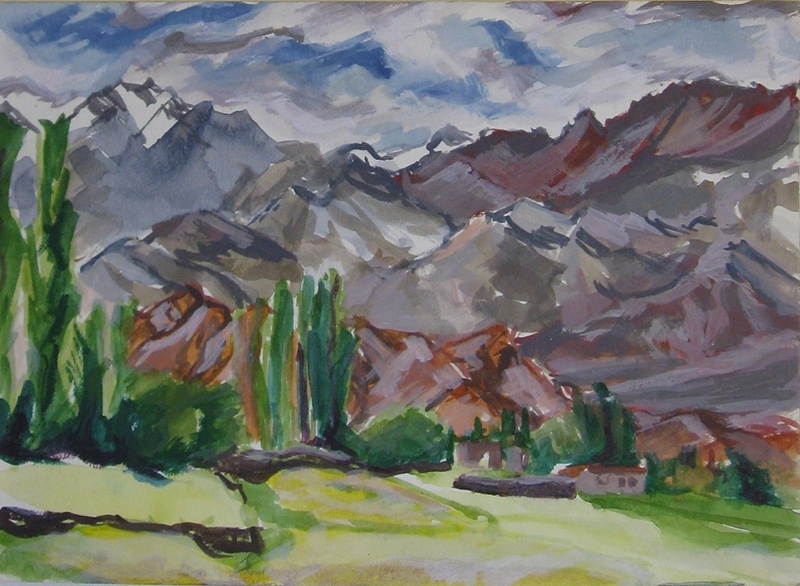
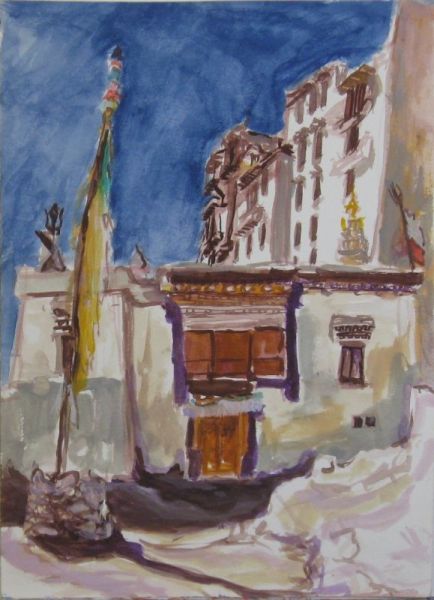
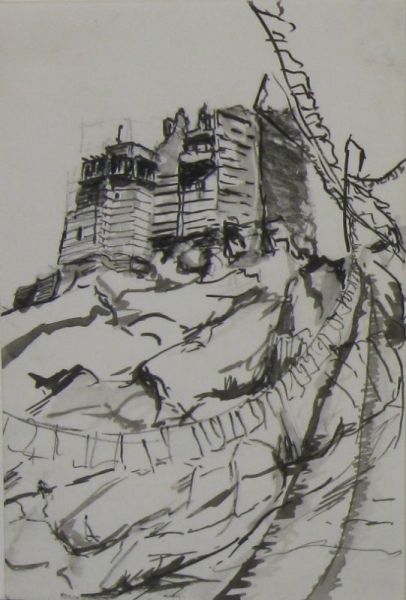
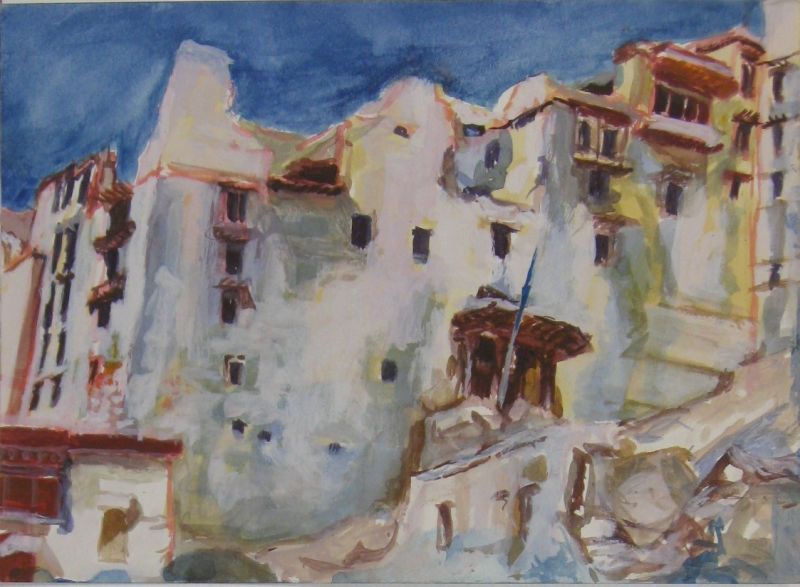
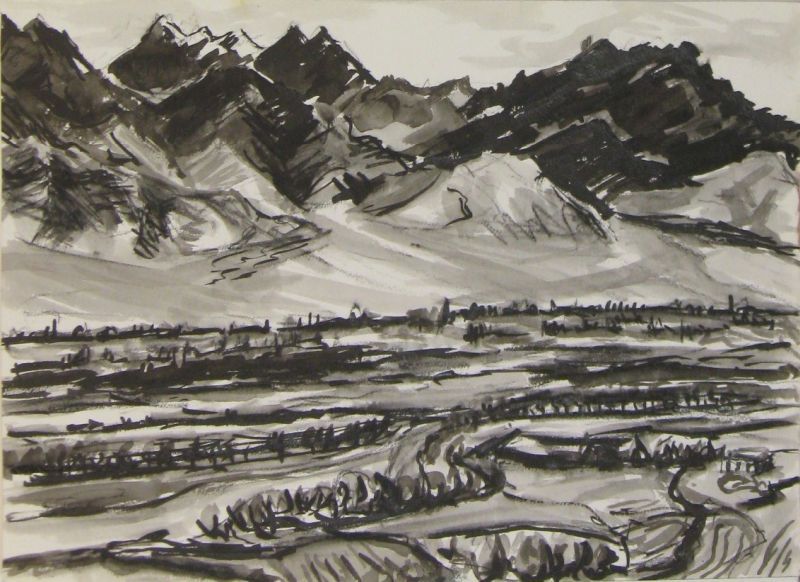
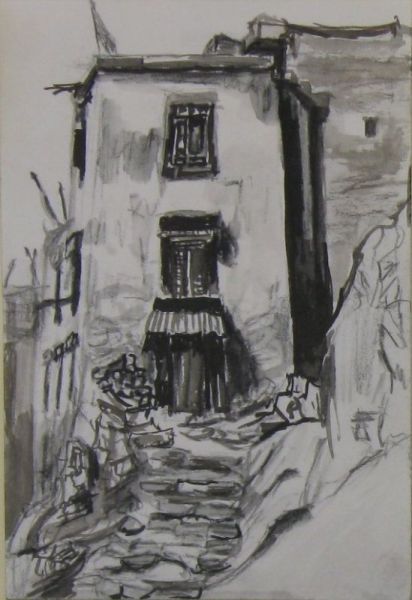
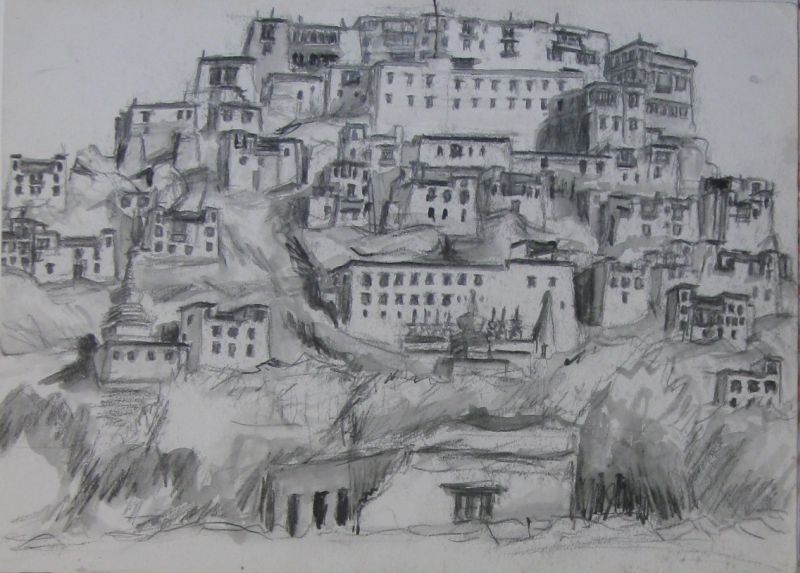
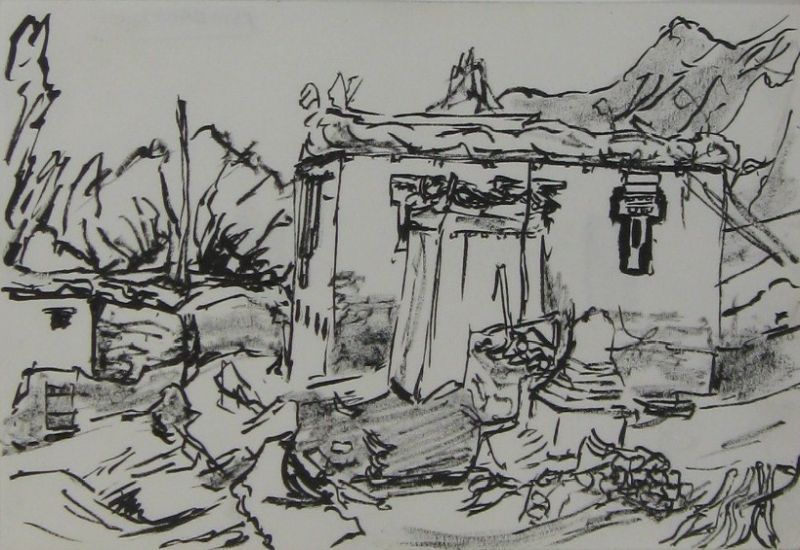
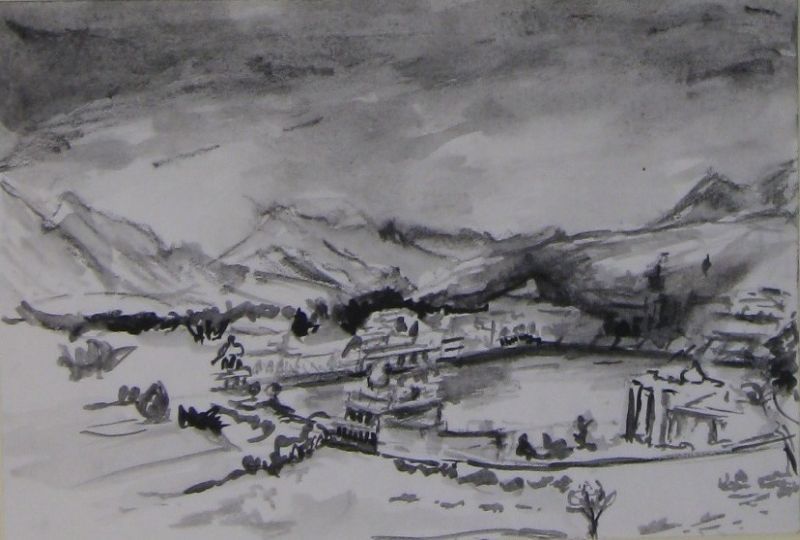
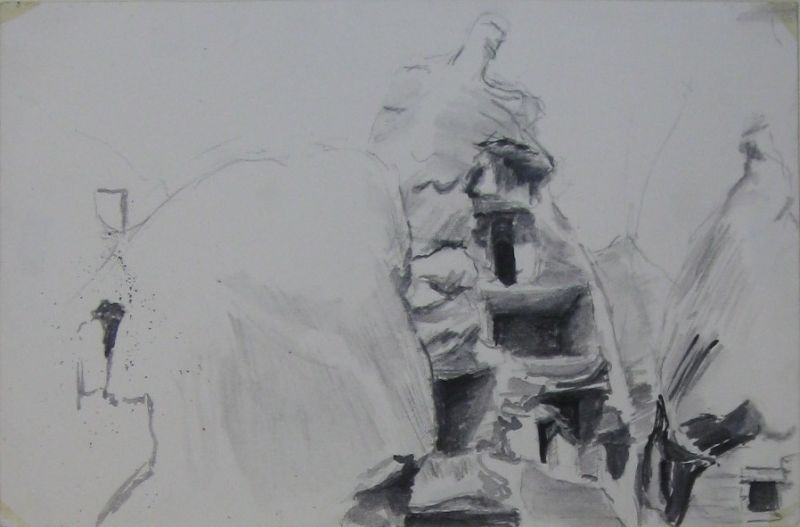
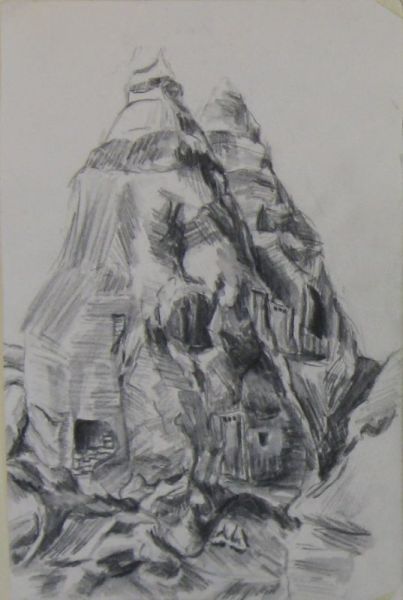
A selection of works on paper from those done in the landscape on these journeys in Europe and Asia between 1989 and 2005. Many were done in quite challenging environmental conditions, including extreme temperatures, high altitude, snow, rain, dust and wind. Drawing in these conditions enhanced the experience of being out in these environments, as I was forced to stop and take in all that was around me.
What I could carry in my drawing folder determined the size and quantity of paper for the artworks on these journeys. For the most part, the art mediums used suited the need to work quickly in all weather conditions out in these landscapes. On occasions, during the 1989 to 1992 journey, I had to post quantities of artworks back to Australia to lighten my load.
Essentially, these journeys were undertaken as a solo traveller. This enabled me to have a far more direct experience with the places and people I came into contact with. When I use the word “we” in my journal extracts, it is in the context of being on a train, bus or ferry. Not with travelling companions.
This page contains journal extracts and artworks from these journeys.
Europe 2005.
A ten week journey through Ireland and central Europe. September to November 2005.
European journal extracts.
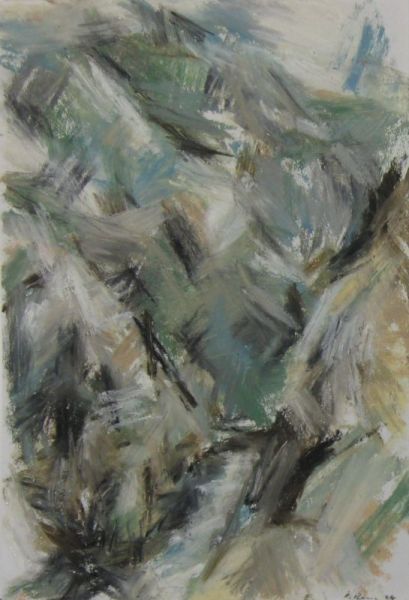
The Benna Beola range was made up of about seven peaks set in a large horseshoe shape, with a deep valley in the middle. It was a dramatic landscape of rocky peaks, steep valley sides with streams flowing down to the valley floor. I had a great day walking from one peak to the next, as I made my way around this range with the highest peak of Benna Beola at 712m on the west side. I spent the whole day up here and the weather stayed good the entire time. I felt lucky to have seen this, as clear weather is rare on the west coast. After a last sketch from the top of the final peak on the south-west end of the range, I walked down the trail to the hostel below, getting back about 7.30pm. Connemara, western Ireland 2005.
I had a lovely fortieth birthday here on the island of Innisheer, with a sleep-in, long breakfast and a leisurely day´s walk around the island in the opposite direction to yesterday. I revisited the shipwreck and did a couple of sketches of the coast. It was windy but a clear sunny day without rain and nice to be outside. Like Inishmore, this island was crisscrossed with thick dry-stone walls of interesting patterns and carefully placed slate stones and large blocks going all the way down to the waterline. Isle of Innisheer, western Ireland 2005.
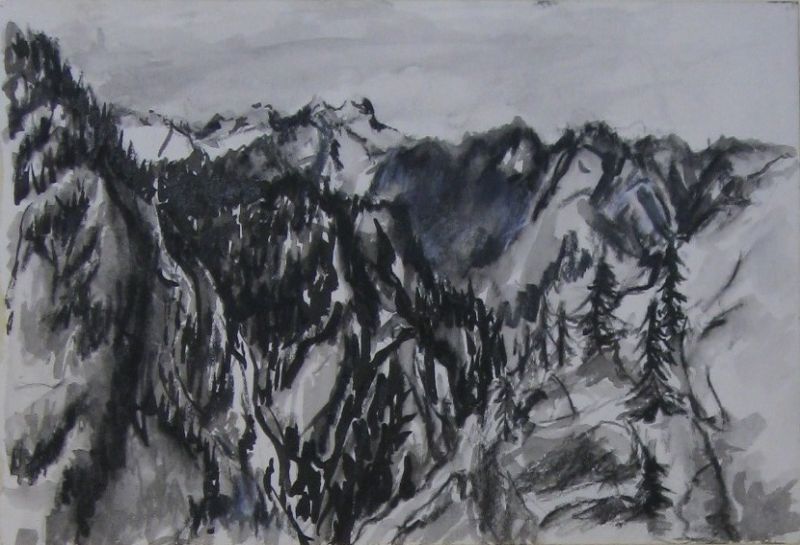
We followed a trail heading across a ridge through the ski fields towards the highest peak of the Vogel Range at just over 2000m. It was a good walk in nice weather, and we climbed a ridge up to the highest point, where I did some drawings from the top while Geoff caught up to me. We had great views on the way up and from the top and could even see Triglav Mountain standing out to the north. Julian Alps, Slovenia 2005.
European artworks.
Mediums: Oil pastel, charcoal and ink on paper. Dimensions: 30-21cm to 40-28cm.
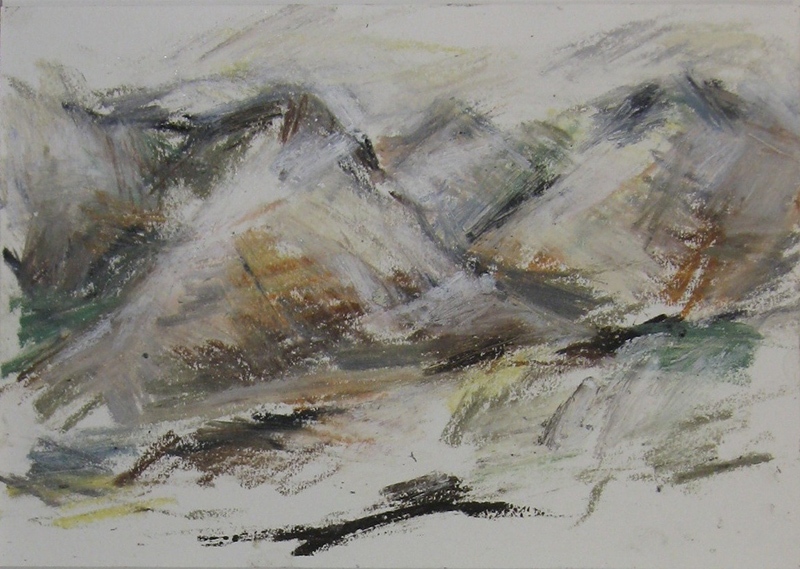
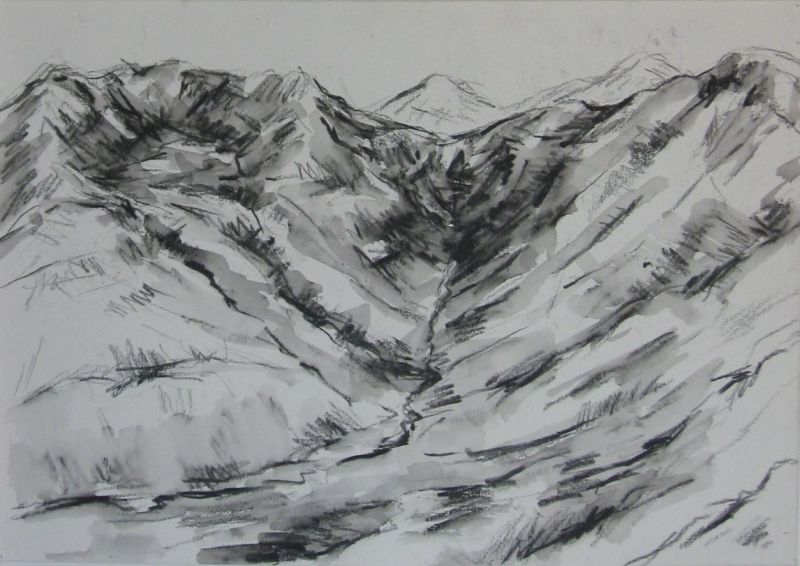
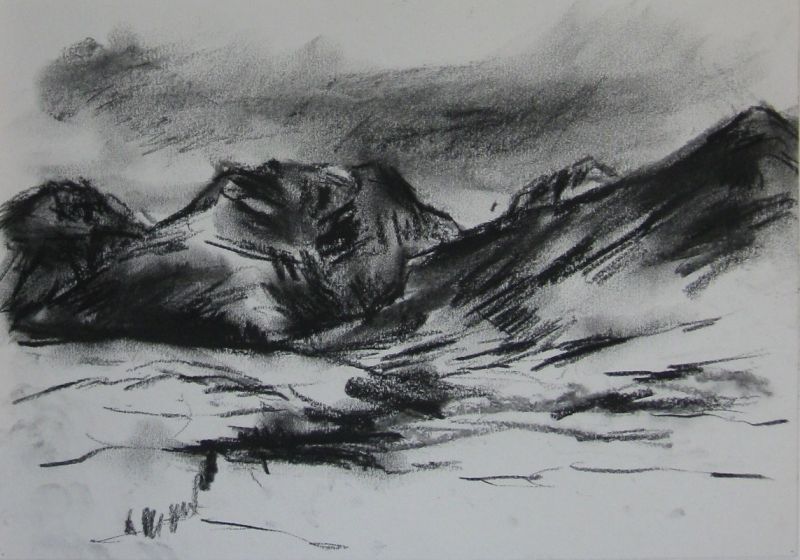
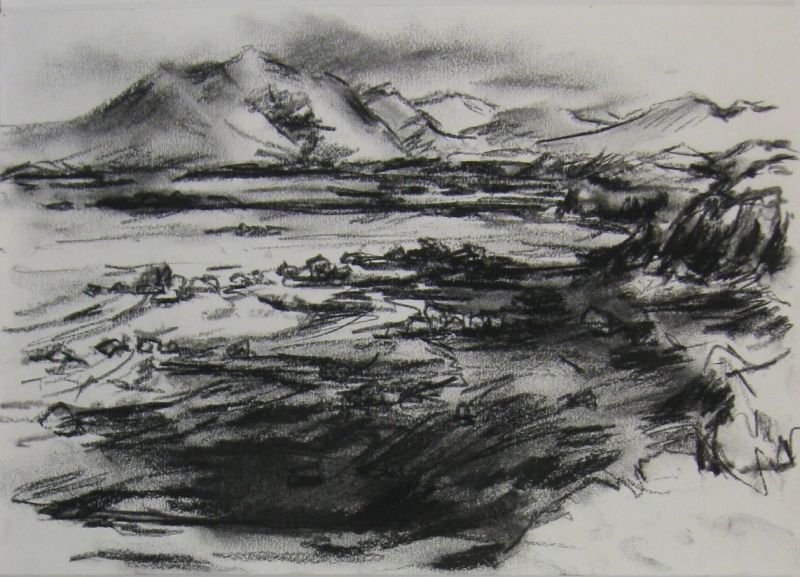
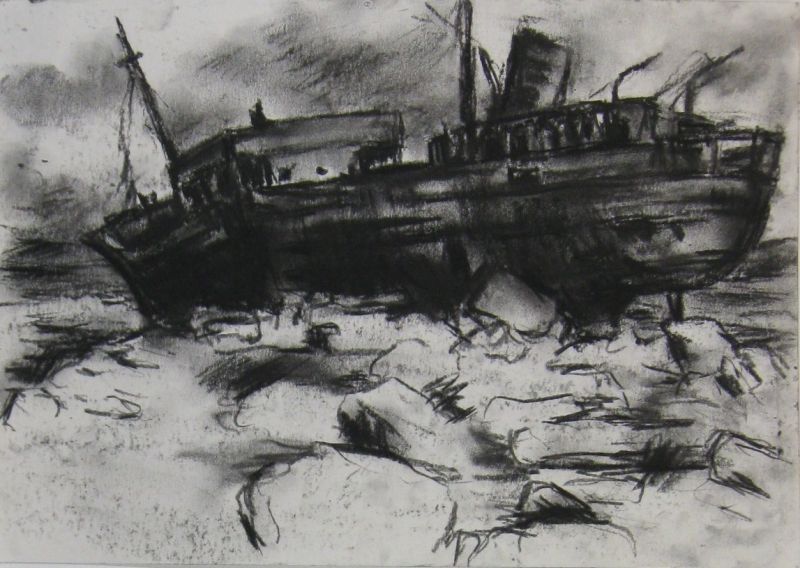
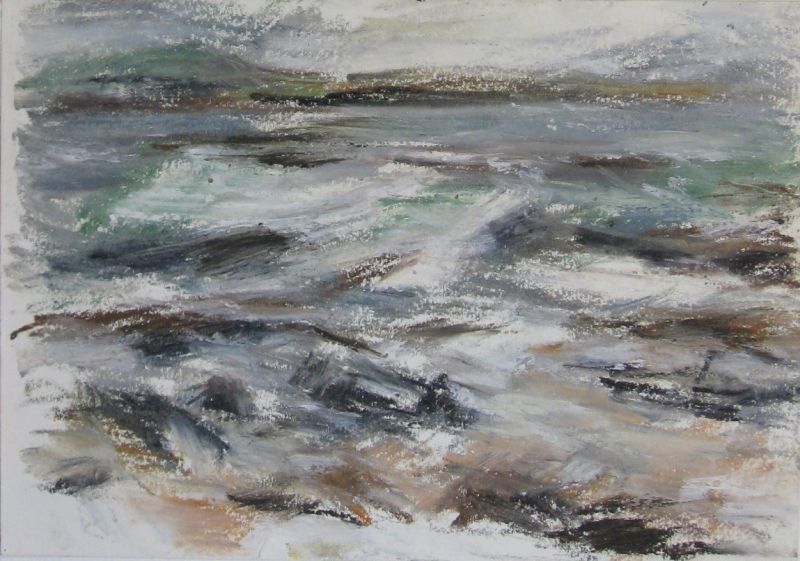
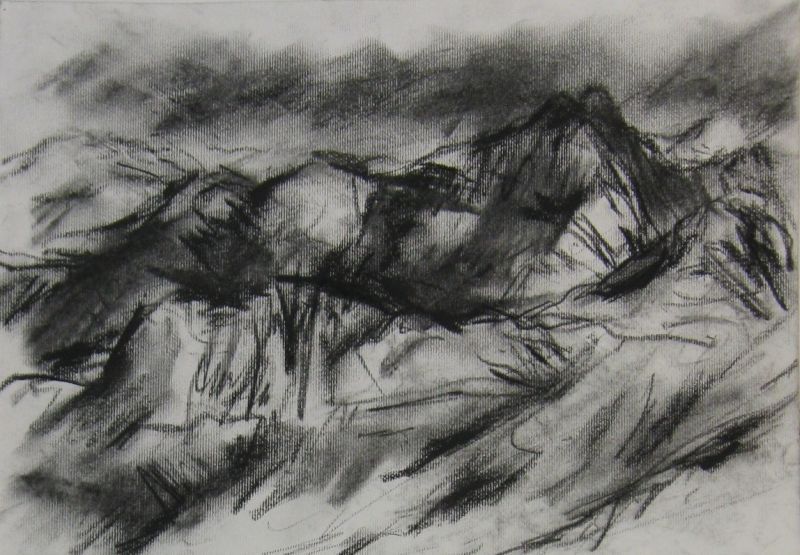
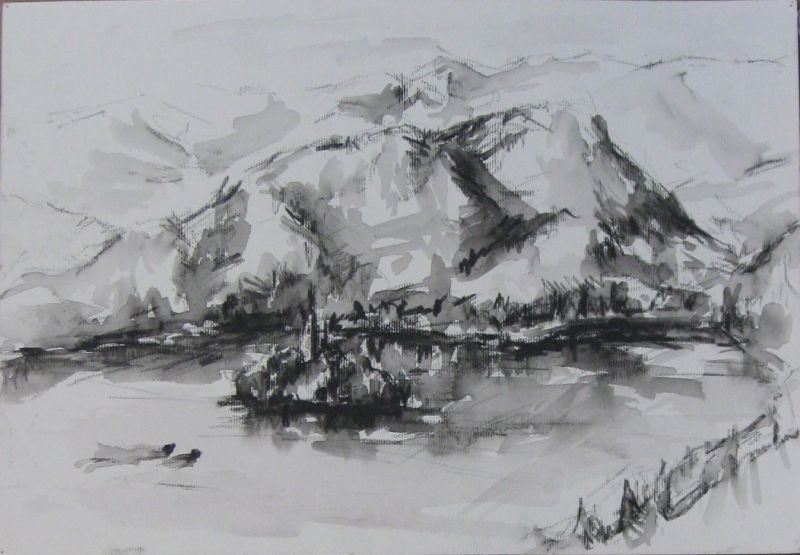
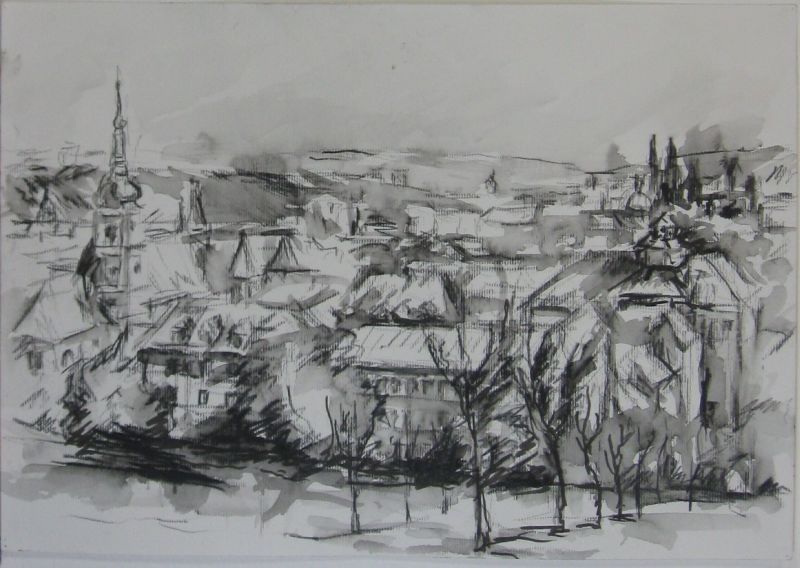
Southern China 2003-04.
A two month journey through the southern provinces of China. December 2003 and January 2004.
Southern Chinese journal extracts.
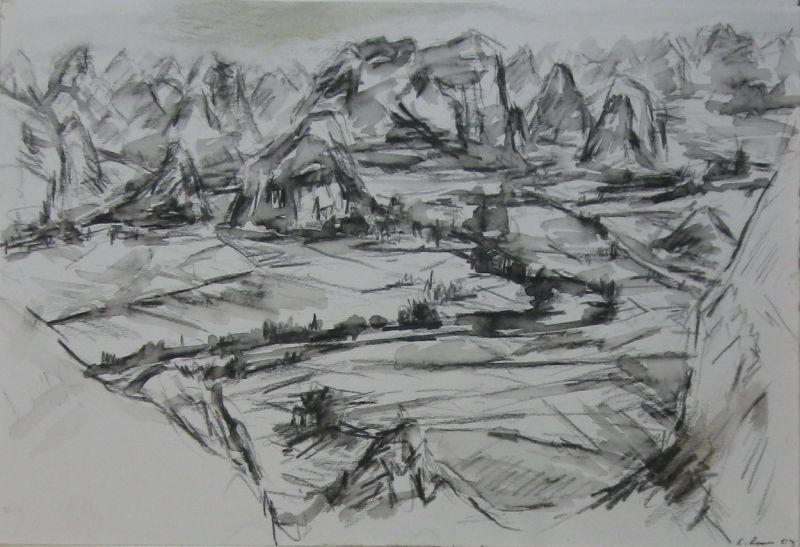
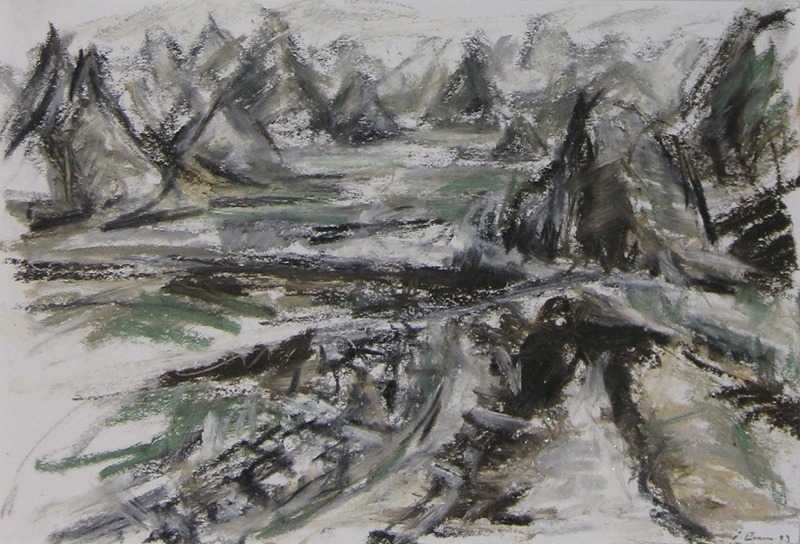
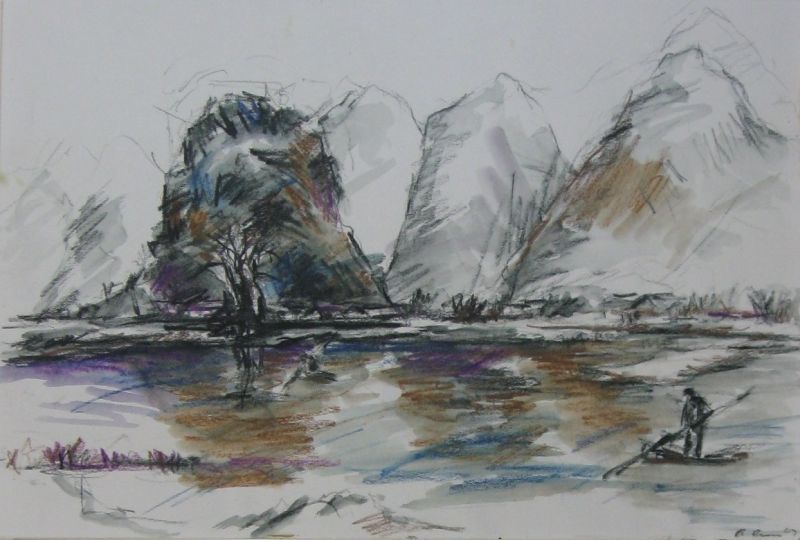
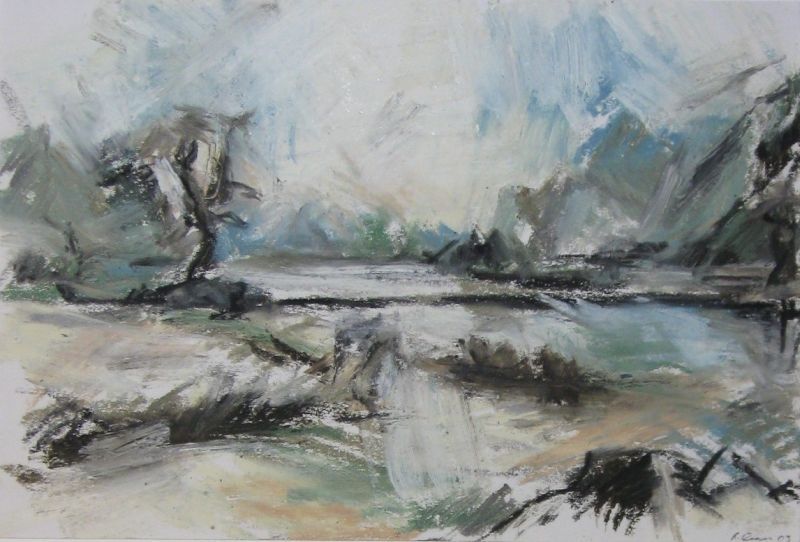
I managed to do three drawings after the second boat crossing and had a simple lunch of boiled eggs and a rice-cake with beans. My hands were numb with cold, making it hard to control my fingers while drawing. The section to the third river-crossing was longer, with a few fake crossings with locals trying to entice me to pay them to cross the river or go down it in their boats. I just showed them my coloured slip and walked on down the valley. Yangshuo region, Guangshi, southern China 2003.
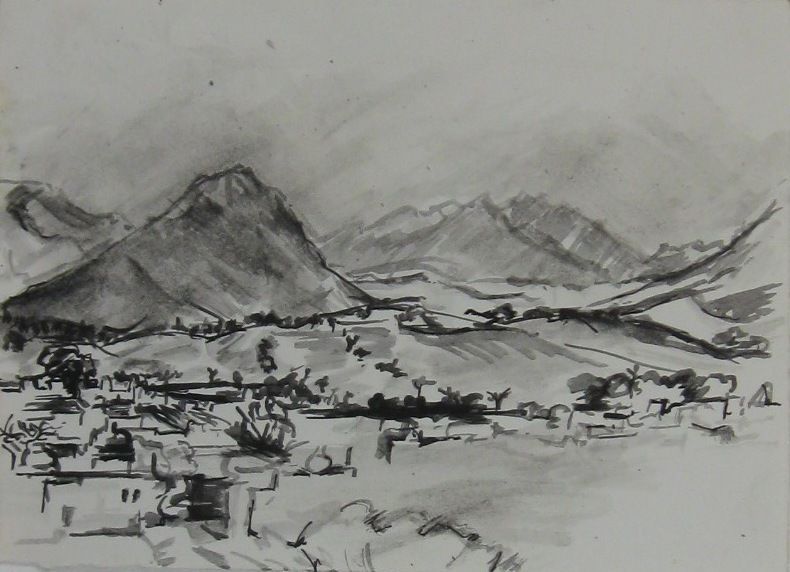
It was a very cold morning, so I had a late start, leaving after breakfast at 11am. It was an easier day’s walk, as I mostly contoured around the sides of the steep valley past numerous villages with only a 200m climb. I had some great views of the gorge and mountains from along this section and from a high point where I did some drawings. I stopped at a Naxi guesthouse for a drink, as the family were chopping up two pigs in the courtyard. Most of it was then salted and wrapped up for storage under the house while some was prepared for cooking. I then had lunch here before continued along the valley as it opened up towards the west. Tiger leaping Gorge, southern China 2004.
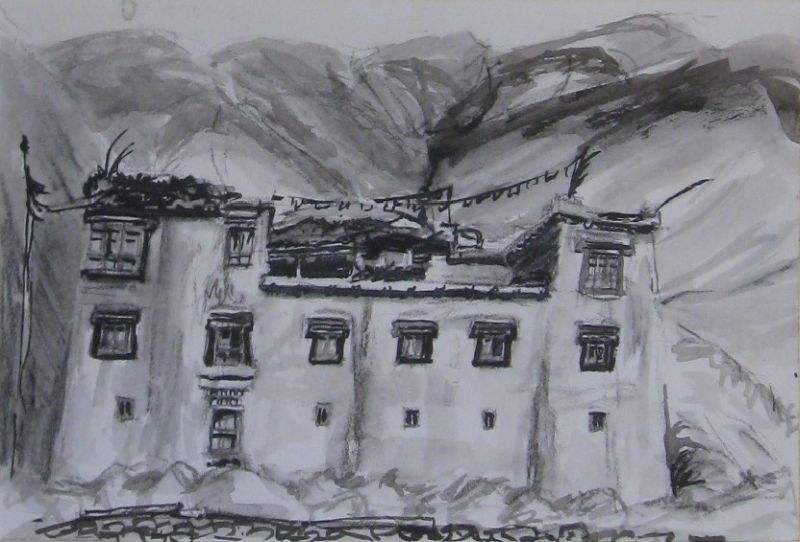
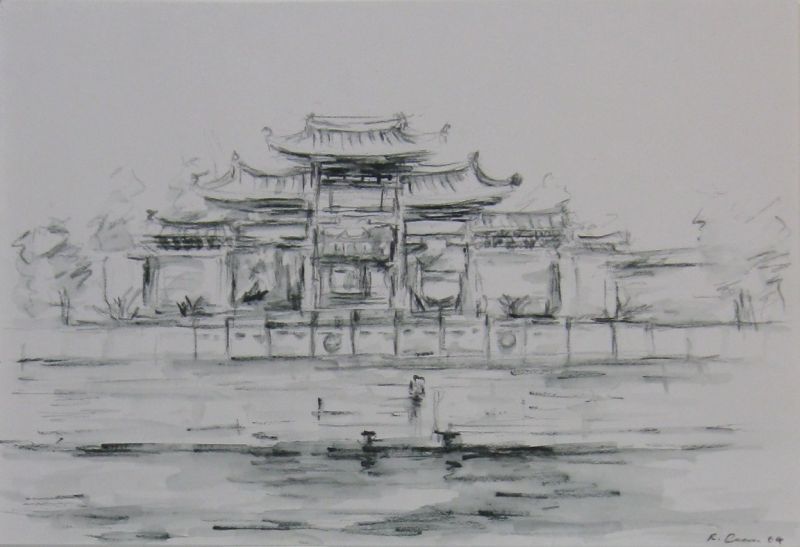
I was presented with the magnificent sight of this large and impressive monastery complex. I did a drawing of it by the road, then continued on in the bright warm sunshine. There was a village in front of the monastery which I walked through first, then up into the various parts of the monastery with its many temples, courtyards and monks’ quarters. It reminded me a bit of Tikse Gompa in Ladakh, as it covered a whole hillside. Zhongdian, Yunnan, southern China 2004.
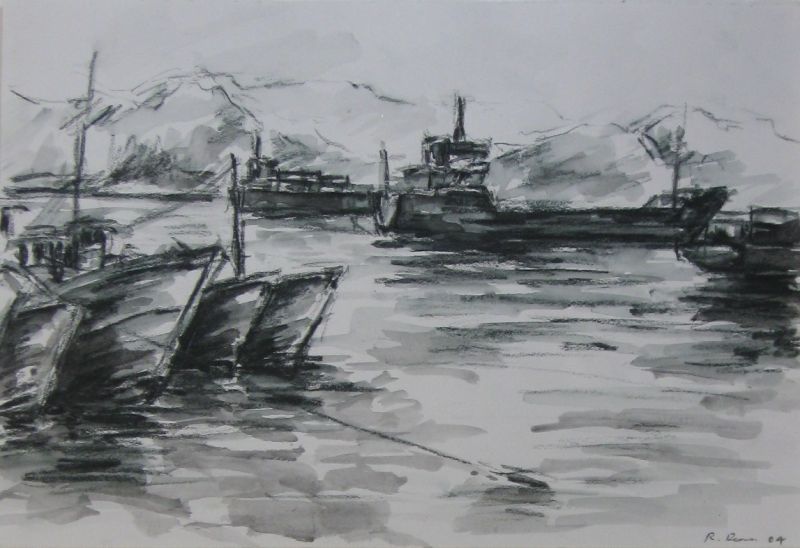
Southern Chinese artworks.
Mediums: Oil pastel, charcoal and ink on paper. Dimensions: 30-21cm to 40-28cm.
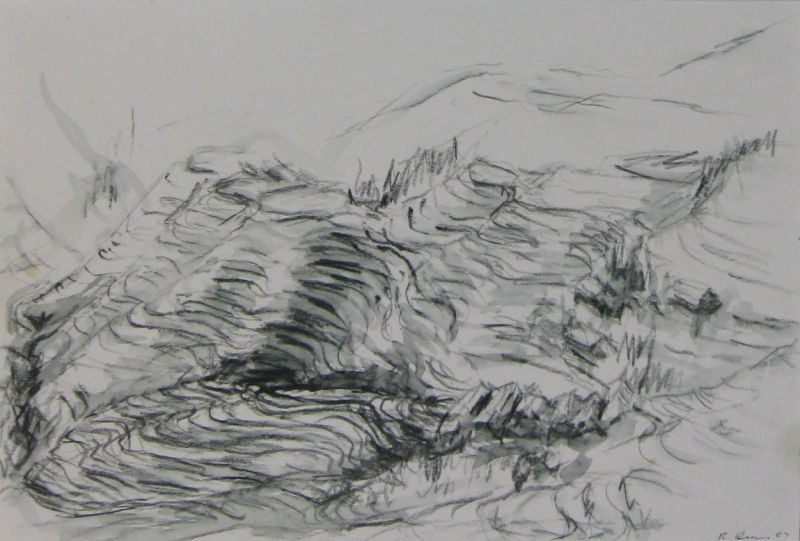
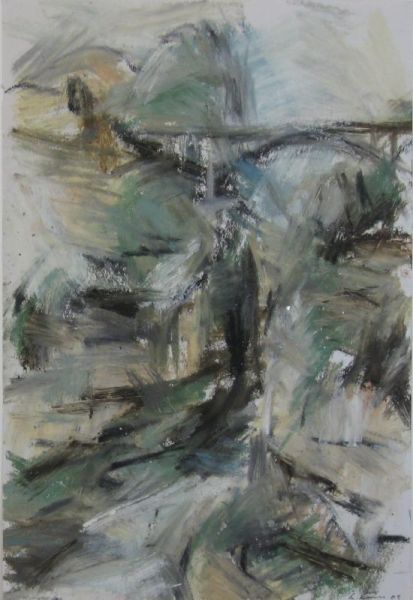
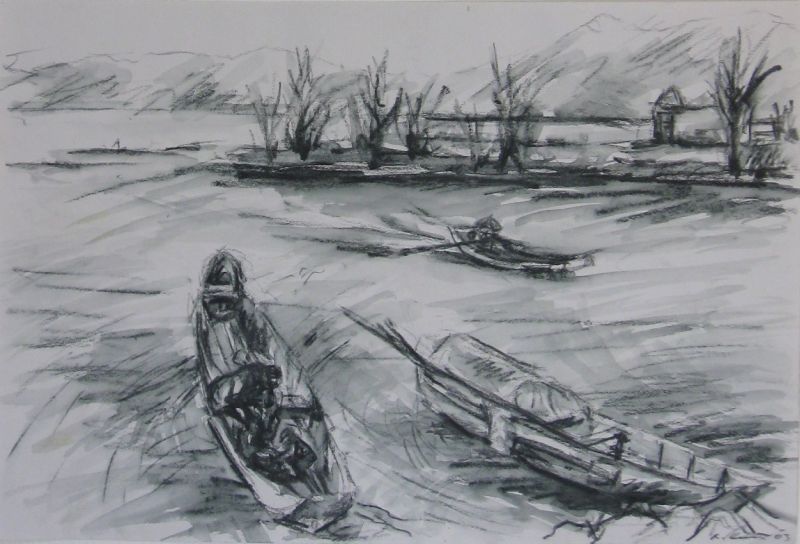
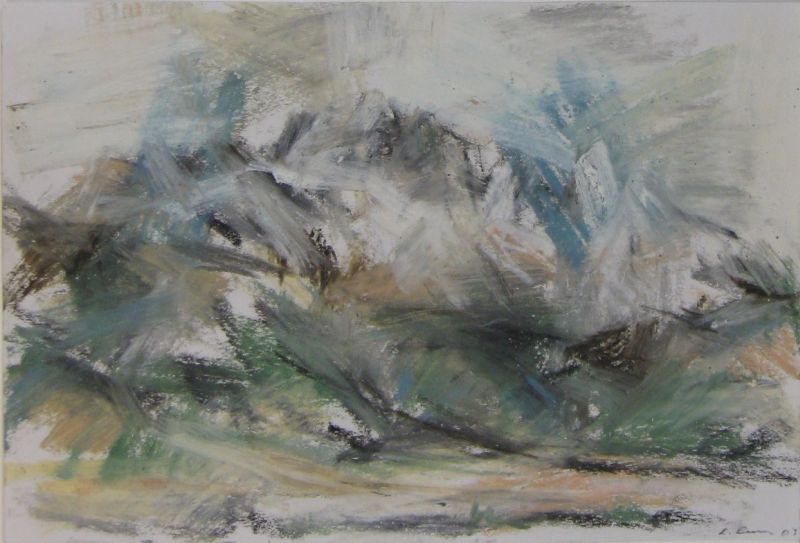
Nepal 1999.
A two month journey trekking in the Annapurna and Langtang regions of Nepal in January and February 1999.
Nepalese journal extracts.
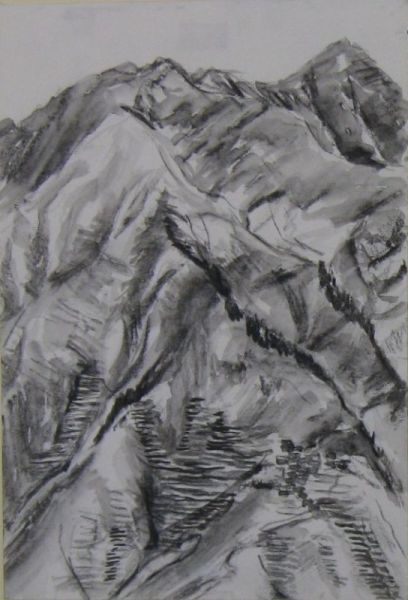
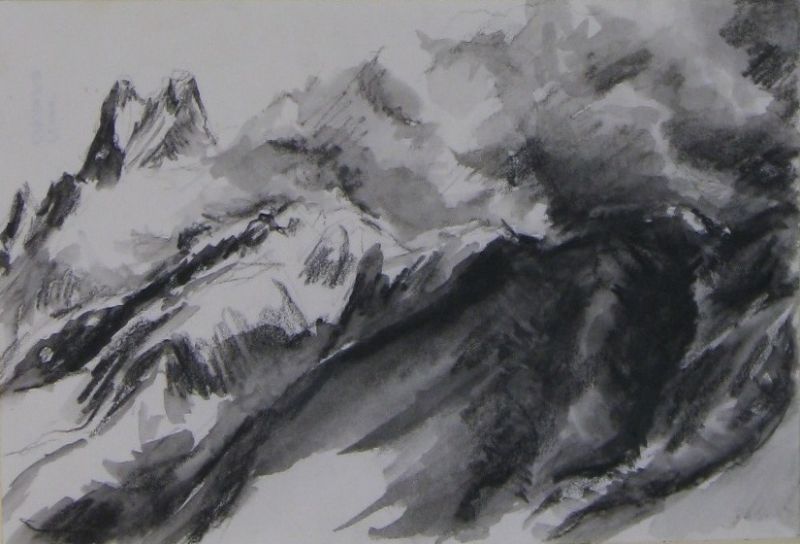
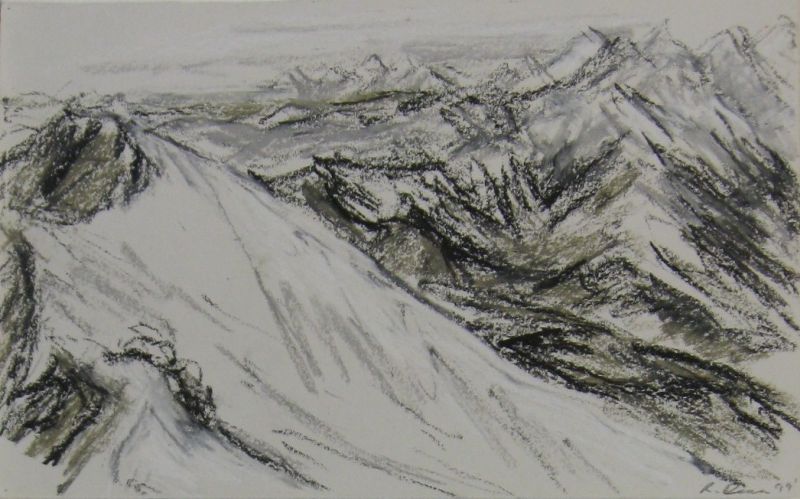
To the east, I could see Machapuchare and a line of very spiky peaks along a ridge to the north that glowed orange in the sunlight. All the mountains surrounding this sanctuary were covered in deep snow that has been wind-blown into a beautiful, fluted pipe-organ-like appearance. Massive ice-flows came down from the high peaks and ridges to converge into glaciers lower down. The energies going on here are immense, with tectonics thrusting up these mountains into the sky and ice and wind carving and eroding them away. Annapurna region, central Nepal 1999.
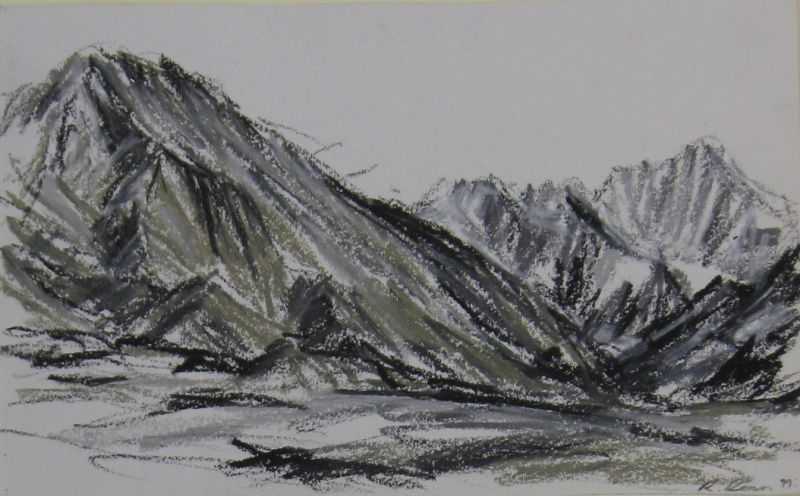
I headed off up the valley with the intention of climbing about halfway up to Thorong La pass at 5400m. The lower part was fairly good going with little snow then it got steeper, and the snow became deeper the higher I got. I had good weather again with clear sunny skies and no wind until midday. I climbed for almost three hours with knee-deep snow by the time I reached the ruins of a small stone hut. I stopped for lunch and did some sketches of the magnificent views from here until the wind made it too cold to hang around any longer. Annapurna region, central Nepal 1999.
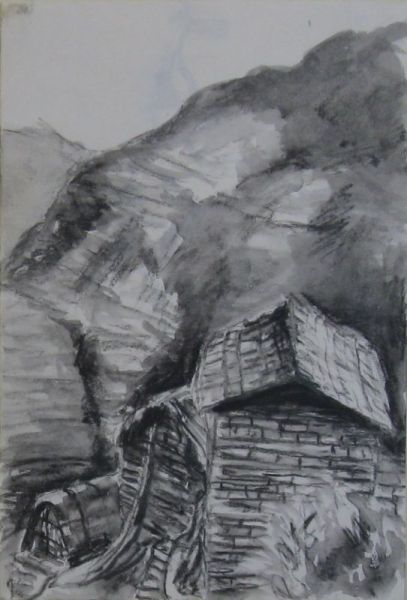
I walked up higher to a gompa overlooking the village and valley. It was not open, but I was able to climb up onto the roof for a great view of the village and broader valley. I did some sketches around the village then walked down to a bridge to cross the river and walked up the left bank across fields with some horses and a few stone houses and barns, back to Manang. I also got good views of both Braga and Manang villages as I walked up this side of the valley. Annapurna region, central Nepal 1999.
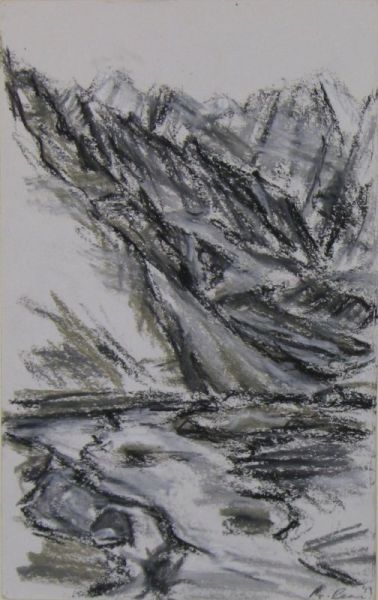
The views from the pass were fantastic, with perfect weather and no wind. I did some sketches here and at a couple of spots on the way down to the lake and the settlement of Gosainkunda at 4380m. After lunch up here, I slowly made my way down, spending about four hours mucking about and enjoying the views. There was much more snow on the northern side, but it was not hard to walk over and down to the lake where I also stopped for a while. Langtang region, central Nepal 1999.
I sat under the mass of prayer flags for four hours, sketching and just taking it all in. The peaks to the east were especially beautiful, but also the sight of Lang Tang and other peaks to the north-west with massive glaciers coming down on all sides and a particularly impressive one coming down off Kangjala Himal, which appeared more like an icecap and almost flat. The same with Yala Glacier, which sits on top of the mountain with icefalls at its edge. The ones on Lang Tang were steep, with gouged-out basins in the lower sections, heaping up high-sided moraines of rubble. Tsenko Ri, Langtang region, central Nepal 1999.
Nepalese artworks.
Mediums: Oil pastel, charcoal and ink on paper. Dimensions: 30-21cm to 40-28cm.
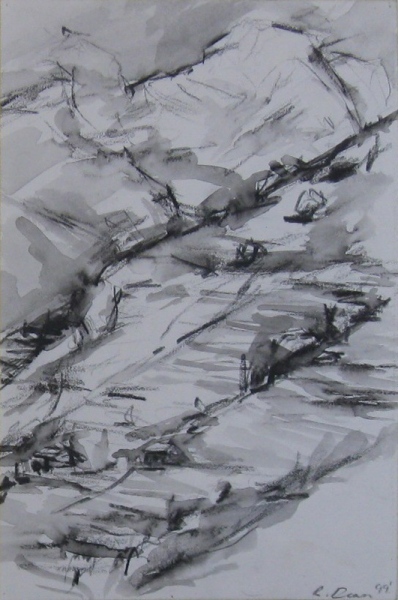
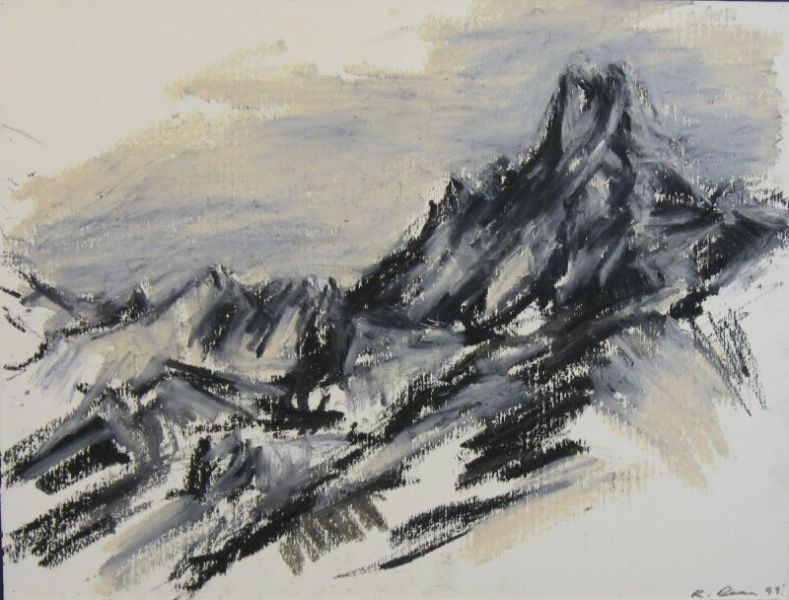
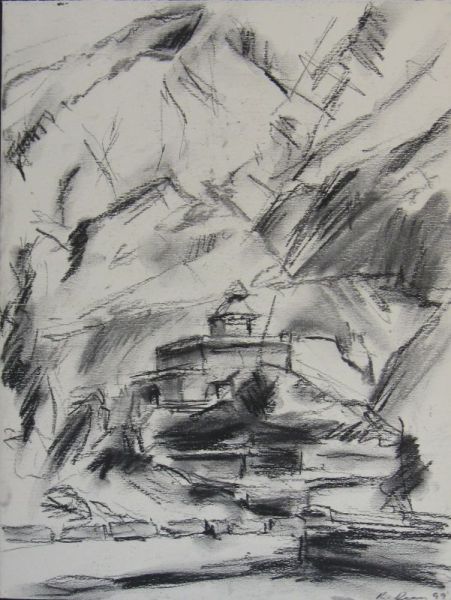
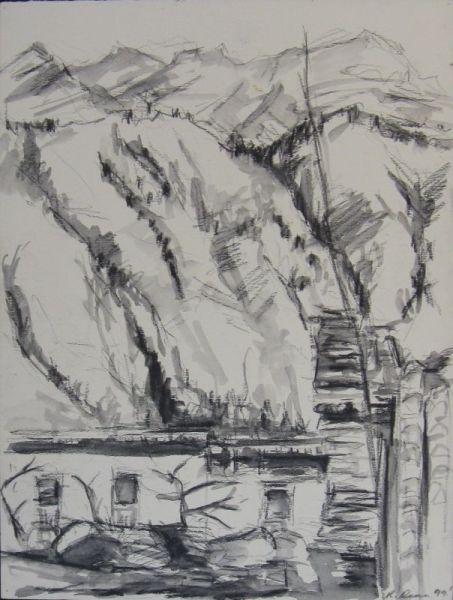
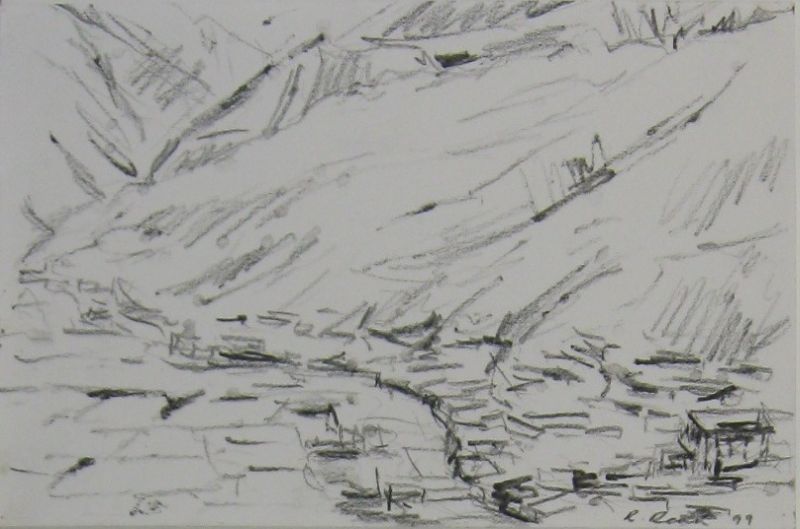
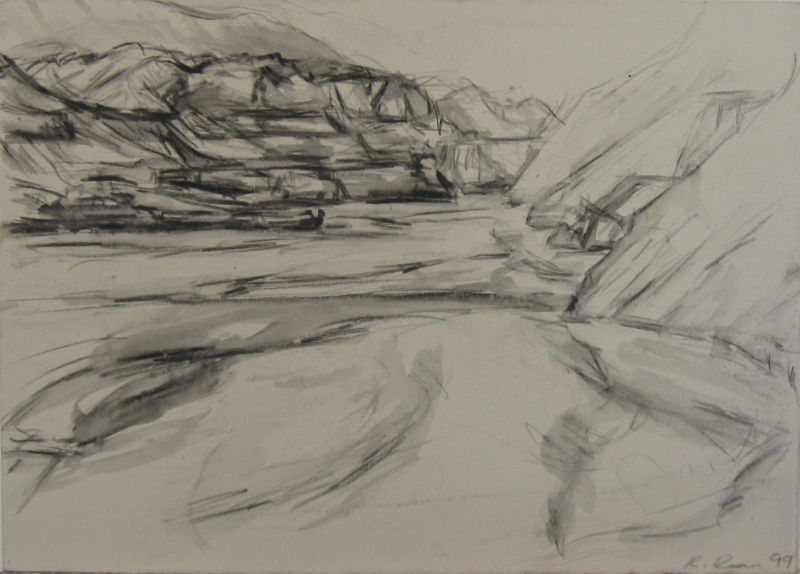
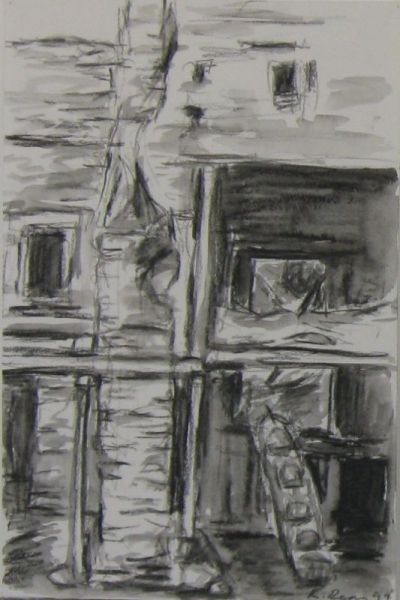
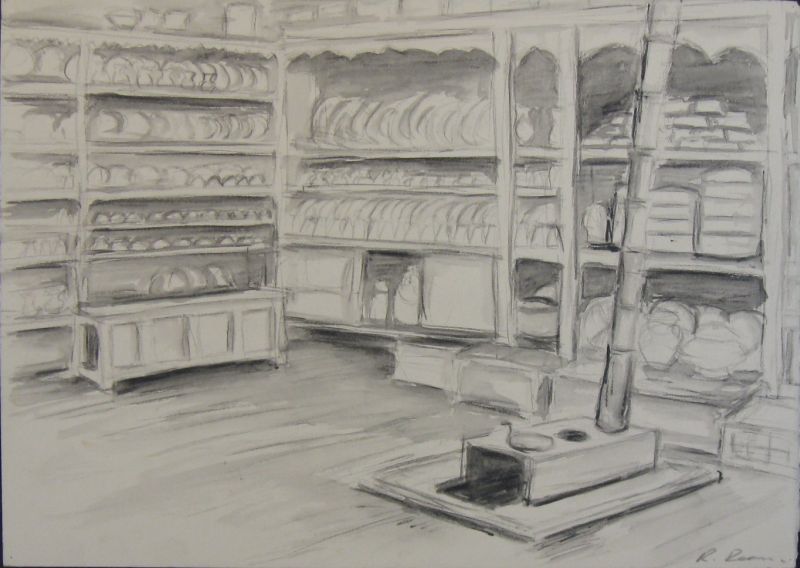
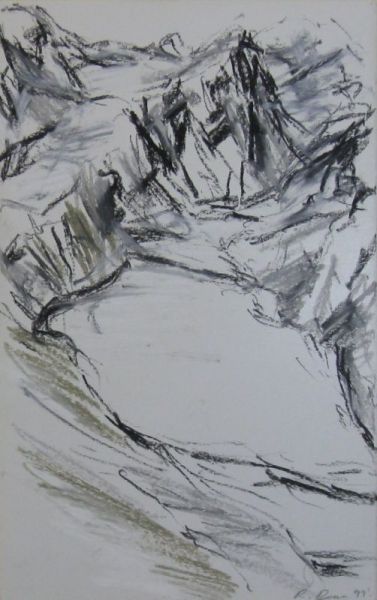
Journey through Southern Asia and Europe 1989 to 1992.
This longer journey was for almost three years. First, was a nine-month period traveling through southern and western Asia (including northern India, Nepal, Pakistan, Iran and Turkey), then 16 months living in Scotland, followed by another nine months traveling through Europe, India, Nepal and the South-east Asian nations of Thailand, Malasia and Indonesia. The Himalayan regions of Ladakh and Nepal, along with the Scottish Highlands, were the focal points for my drawings, as I spent most of my time in these mountainous environments.
A journey through Europe, southern and south-eastern Asia from October 1991 to July 1992.
European, southern and south-eastern Asian journal extracts.
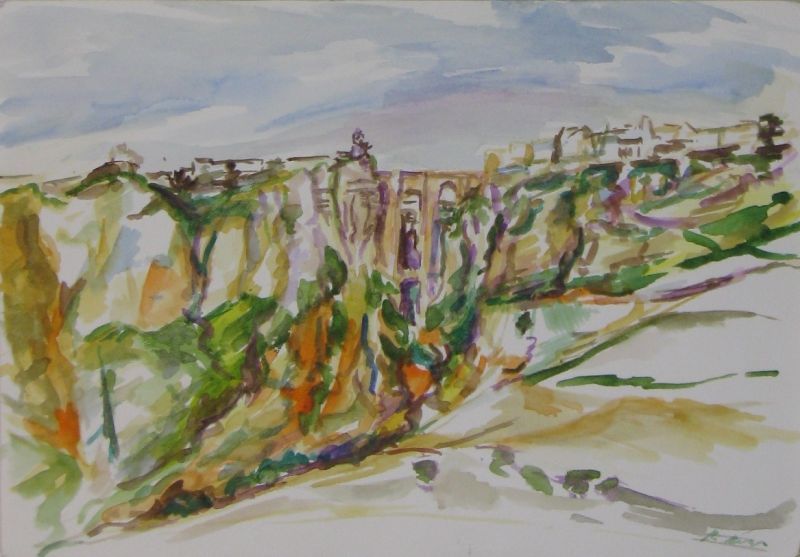
I followed farm tracks out to a spot in the fields where I got a great view back towards Ronda perched above the cliff-tops, and the stunning stone-arched bridge over the deep gorge. I did a couple of sketches here of this, using watercolours and ink. It was good to be drawing again after so long and it was nice to be out in the countryside away from traffic and noise. One guy came by while I was drawing who turned out to be an artist, so we had a bit of a chat before he walked on. Rhonda, southern Spain 1991.
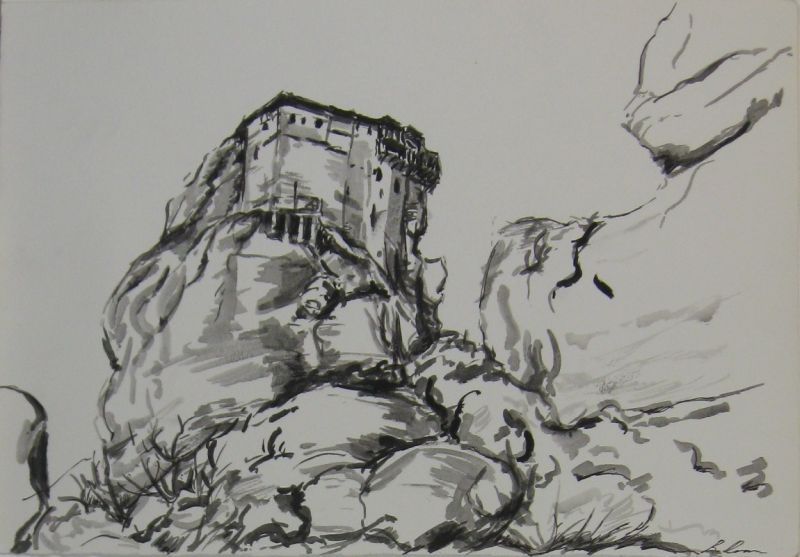
I walked around the base of the rocks to the village of Katali in the next valley, then up a track through fields of grape vines to the first monastery of St Nicholas, built onto the side of a tall, narrow rock as a single building. Almost surreal-like, it seemed to become one with the rock, as though it was meant to be there. Unfortunately, it was closed, but I did get to do a sketch of it from the fields below. Meteora, northern Greece 1992.
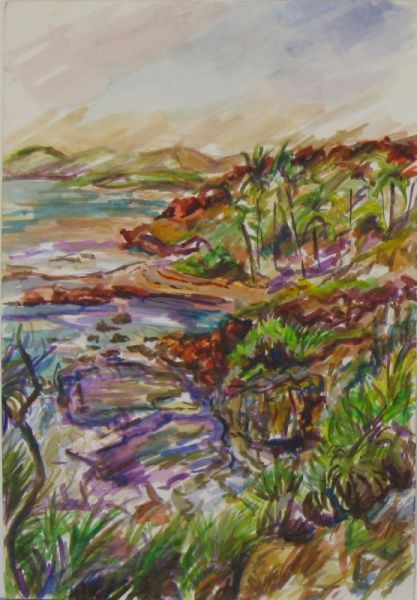
The coastline between Juna and Bagu beaches was particularly beautiful with iron-red rocks, turquoise seas and deep green vegetation. I intended to return to this part of the coast and do some sketching. I enjoyed the little coves with groups of palm trees, rolling waves, colourful rocks and headlands receding into the tropical haze. Goa, western India 1992.
I did some sketches of the structures here and by the Padmini Palace Ghat where some women were washing clothes in the low waters. A small temple sat on an island facing the main part of the palace, but the water tank was almost dry. I wondered if the fate of this place was similar to Fatehpur Sikri with a drying climate causing the citadel to be abandoned. Chittorgarh, western India 1992.
I had tremendous views up both valleys from here, looking up towards Island Peak to the east, Ama Dablam to the south, Lotse to the north and lots of wonderfully shaped peaks along the west side of the valley. The air was very clear, and I got a bit sunburnt as I did my one and only sketch on this trek looking north from here. With the giardia, I just didn´t feel like drawing. I was losing weight and had no energy to do more than walk each day and rest in the evening. Towards Mt Everest, eastern Nepal 1992.
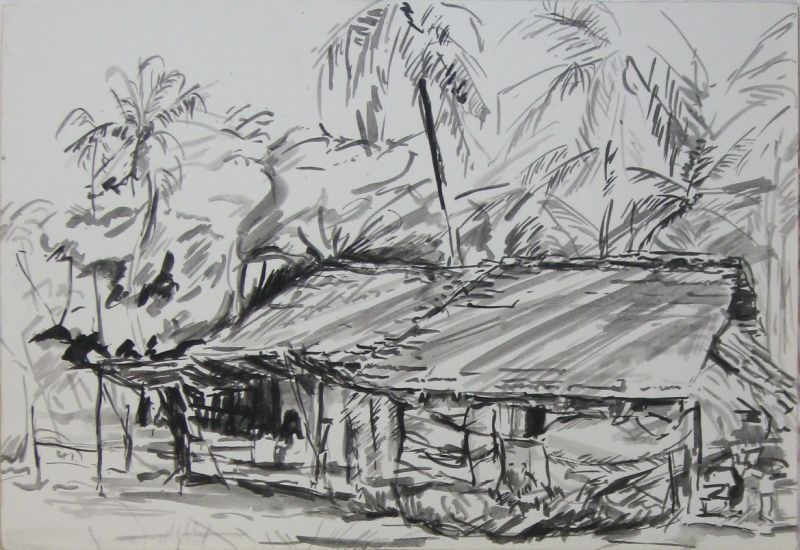
We then travelled through some beautiful countryside of lush, forested hills and fields past rapids and deep pools in a river that flowed out of a large lake. We stopped by the lake for a swim on the way back to Bukittinggi. In the bus, the driver played Indonesian pop music which sounded just perfect here as we all jigged along to it with the windows open and driving through this tropical paradise. Bukittinggi, central Sumatra, Indonesia 1992.
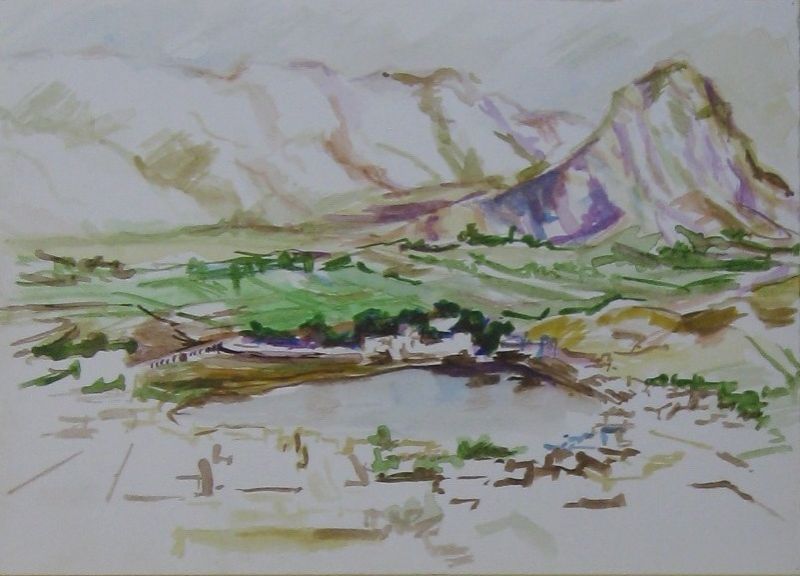
European and southern Asian artworks.
Mediums: Watercolour, ink, pen and pencil. Dimensions: 30-21cm to 50-36cm.
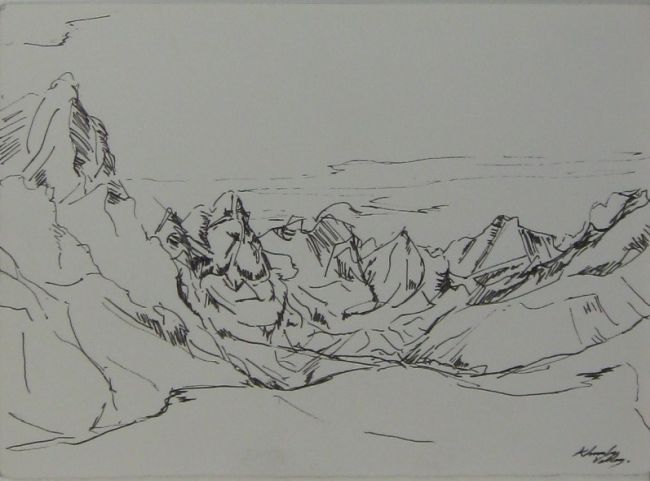
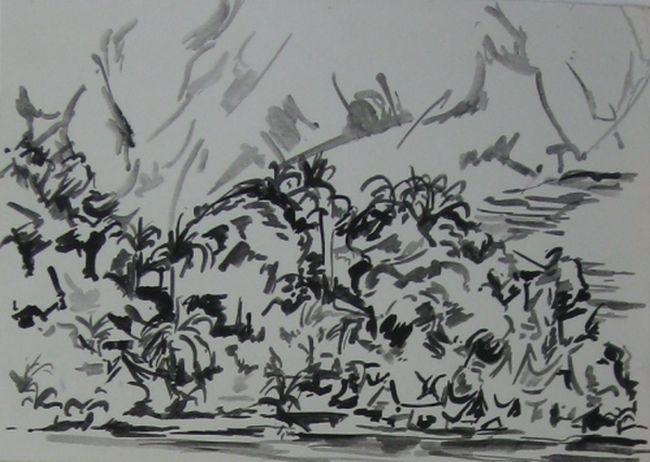
Living in Edinburgh and the Scottish Highlands from June 1990 to September 1991.
Scottish journal extracts.
After one day back at work, I had my second day off and this time I did some sketches of the castle from Princes Park below. I then walked up Arthur´s Seat again, this time in lovely fine weather and got great views of the city and all around, including the Firth of Forth with the huge Forth River Bridge to the west. Edinburgh, Scotland 1990.
I did more sketching on my days off and hired a bike to go back out to Rannoch Moor. It was stunningly beautiful out there with its bleak open moorlands and lakes, right across to the peaks of Glencoe. The fast-flowing stream from these small lochs and tarns flowed into Loch Rannoch. The peat was very thick here and quite spongy to walk across as it held huge amounts of water. Rannoch Moor, central Scotland 1990.
It was getting very cold now, but that didn´t stop me going out and sketching. My favourite locations were along the loch, by the waterfall and above the village. Some days, it was nice and sunny, but when it clouded over the temperature dropped like a stone. There were more fantastic still days and evenings with beautiful sunsets at this time, but the days were getting very short, as it was only one month from the shortest day. The sun would rise at about 9am and set before 4pm, all through the winter months. Loch Rannoch, central Scotland 1990.
The western half of Loch Rannoch was still frozen, and the hills were covered in snow. We had good conditions for skiing and could travel easily over the country from Loch Rannoch up onto the moorlands north to Loch Ericht. It was a beautiful sunny clear day, and the views across to Glencoe were stunning. It was as though we were in a high Arctic tundra wilderness. There were no signs of any human habitation. It was a totally snow-covered landscape as we crossed the edge of Rannoch Moor on our skis. The peaks of Glencoe to the west were crystal clear in the still air, and the small lochs dotted across the moor were all frozen. Near Loch Rannoch, central Scotland 1991.
Scottish artworks.
Mediums: Watercolour, ink, pen and pencil. Dimensions: 30-21cm to 50-36cm.
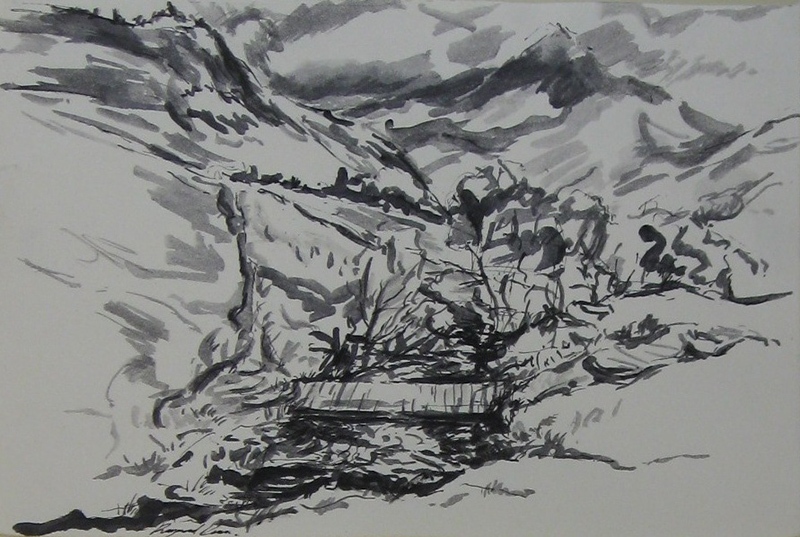
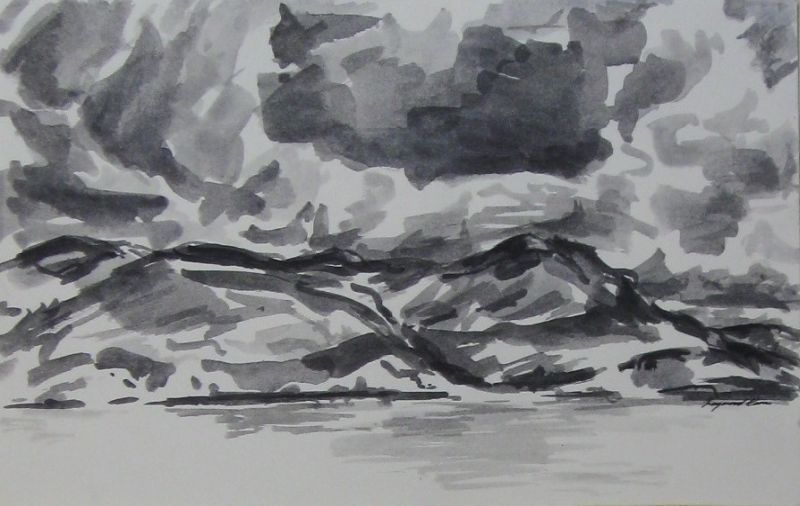
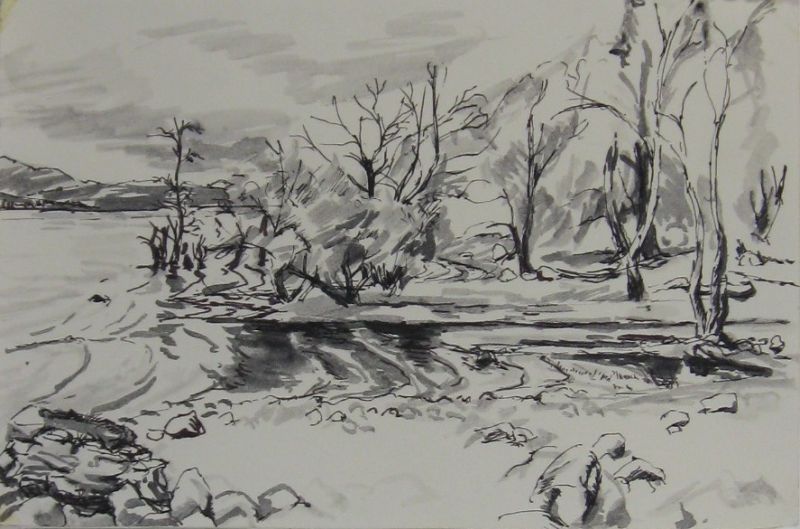
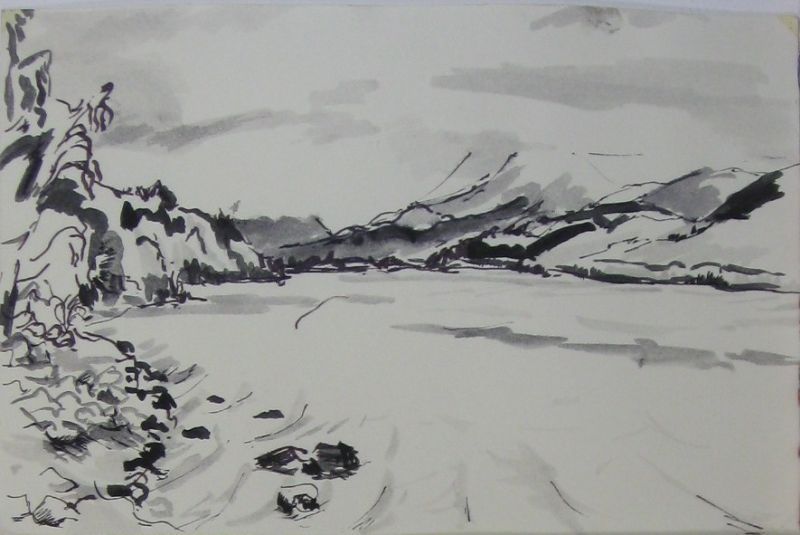
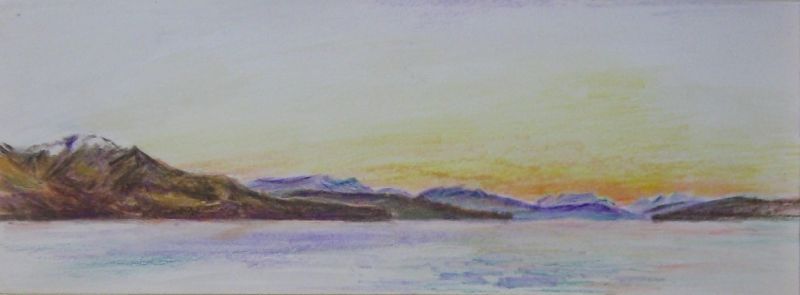
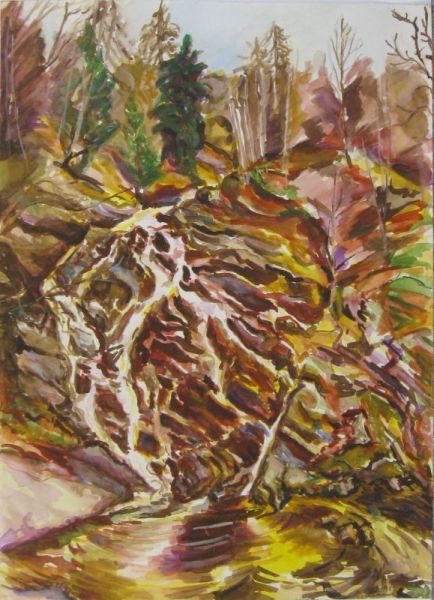
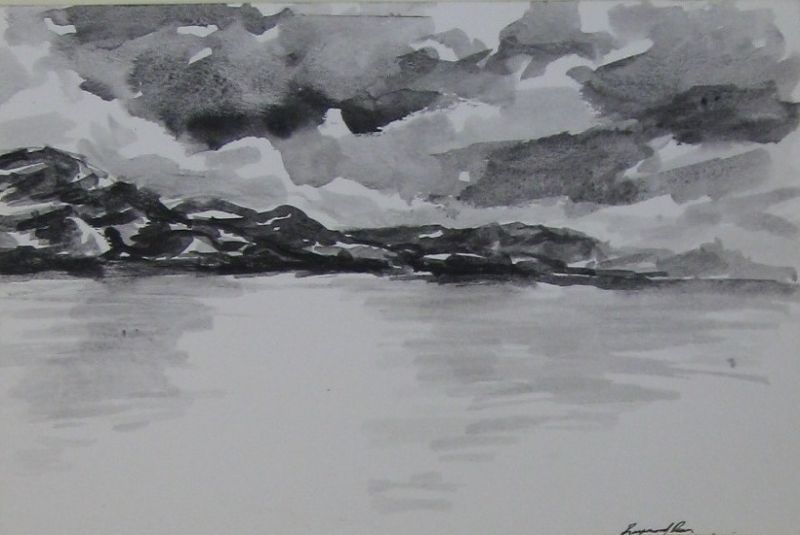
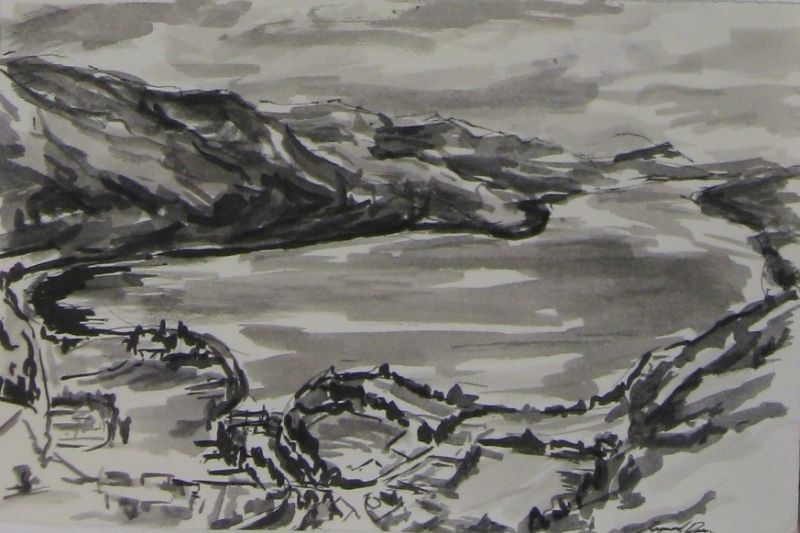
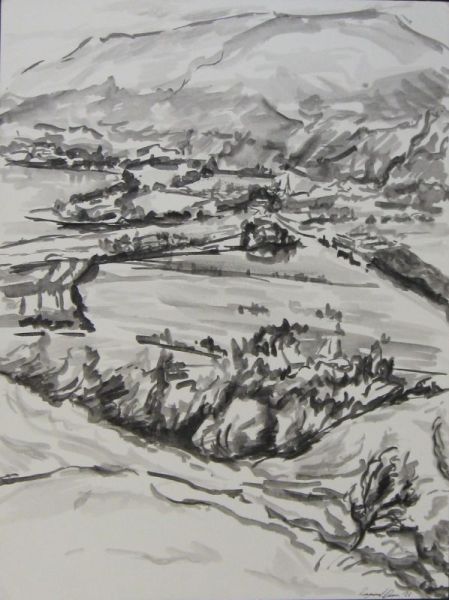
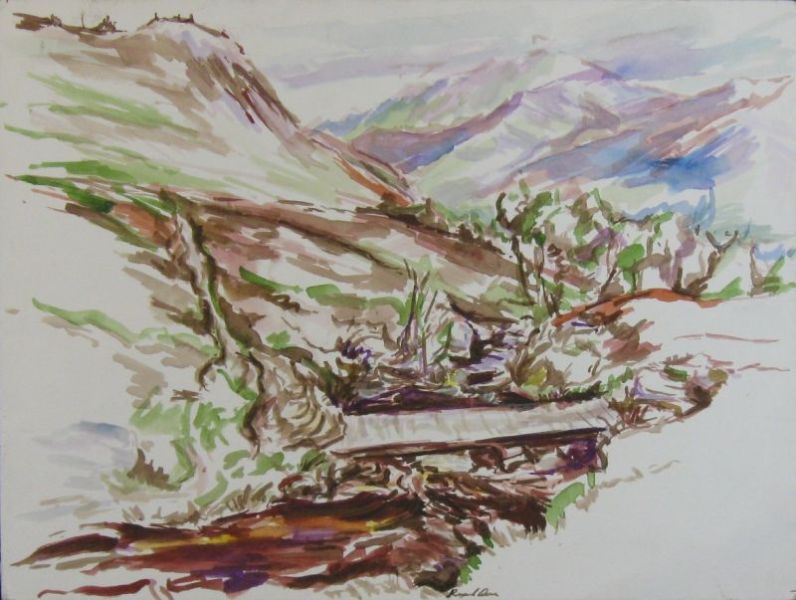
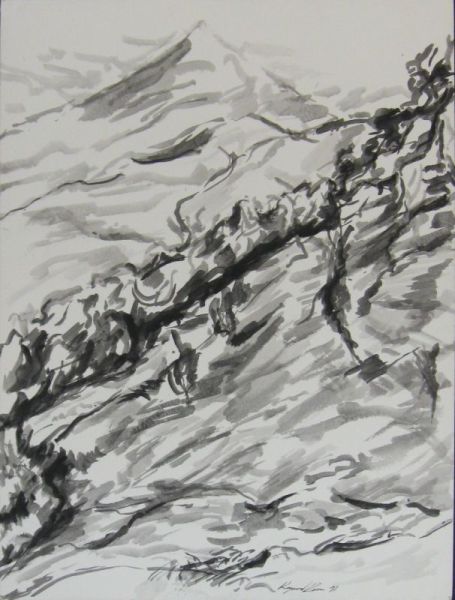
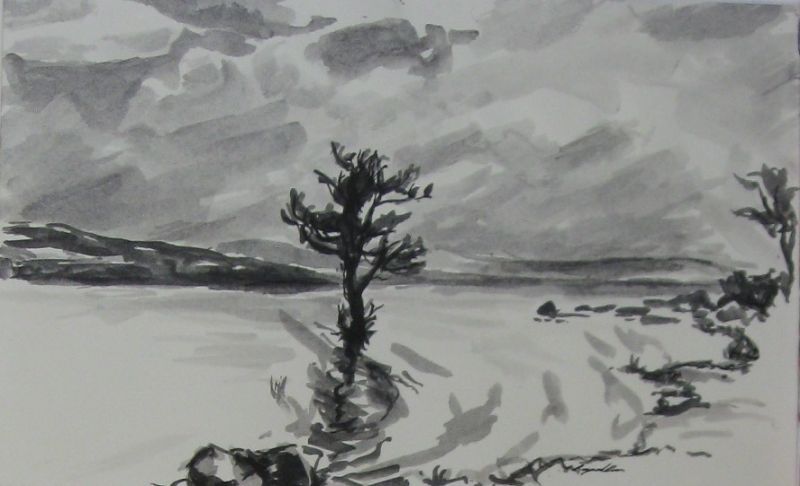
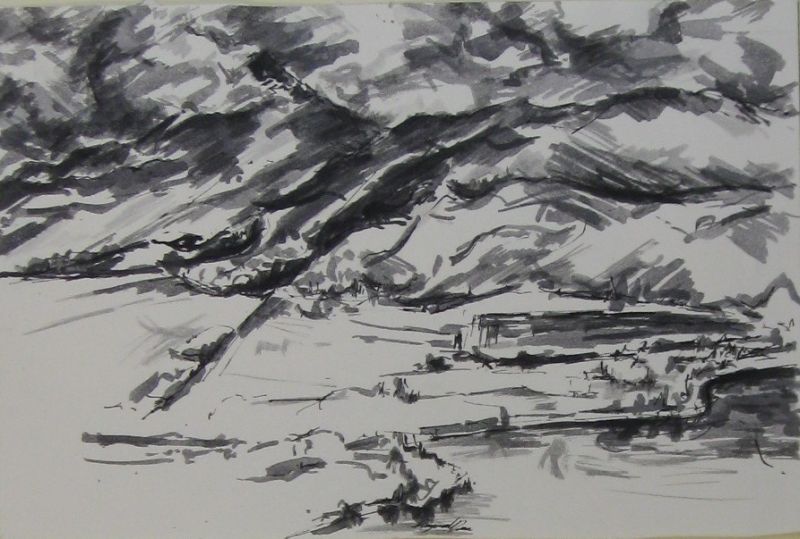
A journey through southern and western Asia from September 1989 to June 1990.
Southern and western Asian journal extracts.
From my room window, I spotted Mic out in the barley fields with the neighbouring family. I grabbed my sketchbooks and camera and joined him. We had a fantastic morning out in the field with this family where we met two mothers with their children and grandmother. They were all working to harvest the barley. Cutting it by hand and piling it into pyramid shapes for it to dry in the sun before carrying it to store under their house. They were constantly singing while they worked and while Mic and I took photos and sketched. After a while, they let us help them with the harvest, to their great amusement. Leh, Ladakh, n-w India 1989.
Immediately in front and above the family´s home rose the magnificent Tikse Gompa. A truly impressive sight with some similarities to the Potala Palace in Lhasa, Tibet. The monastery is built up the side of a large hill with white painted buildings all the way up and two or three large dark brown and red buildings at the top. I followed a path that wound up between what were monk´s quarters and classrooms. I took it slowly, stopping to draw here and there the many wonderful structures. At the top of the monastery complex there were three large temples set around a small courtyard with steep stairs leading up to each one. Ceremonies were being held with many monks moving from one temple to another or off down to the classrooms and living quarters lower down the hillside. It was a hive of activity in what seemed like a world of its own from medieval times. Indus Valley, Ladakh, n-w India 1989.
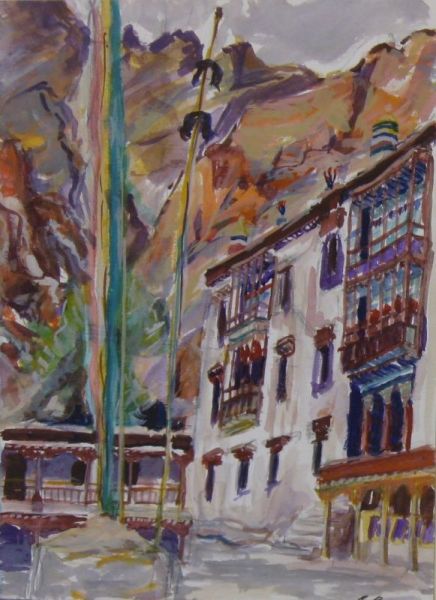
The monks danced in a circle to drums, symbols, horns and trumpets and spun around with arms and legs in the air to the rhythm of the music while they also played castanets and small symbols between their fingers. It was very impressive and a living expression of Buddhism that combined dance and music with meditation and ceremonial religious practices. A small crowd of locals and foreigners sat around the sides and the entrance of the chapel watching the monks as they swirled and danced their way around the dimly lit cavernous space. Later, out in the monastery courtyard, I took a very long time over a gauche painting of the chapel´s façade and the large courtyard with its wonky wooden verandahs. Again, I was surrounded by novices, monks and locals curious to see what I was doing. Hemis, Ladakh, n-w India 1989.
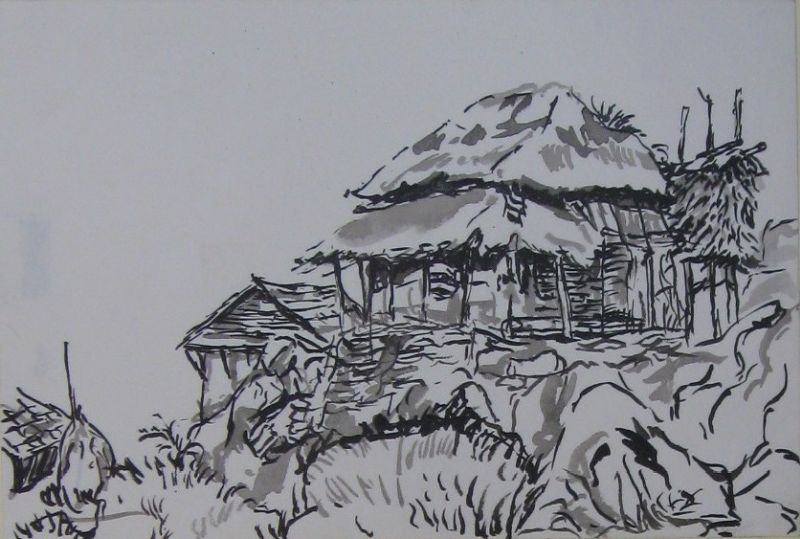
We eventually came out of the narrow gorge into a wider valley just before a junction of two streams. Here, I took a detour to the north while the others continued towards the village of Yuritse. I walked on up to the village of Rumbak where I did some sketches of the farmhouses there. There were fields but no trees up here and the crops had all been harvested. I imagined winter here came a little sooner than in Leh. Towards the Markha Valley, Ladakh, n-w India 1989.
There was no wind, so I could hear sounds from far away such as dogs barking on the other side of the valley, waterfalls and someone chopping wood in the forest. I did some sketches of the peaks and the clouds moving around them, along with the farmhouses and terraced fields that stretched all the way down the steep hillsides to the valley floor. Annapurna region, central Nepal 1989.
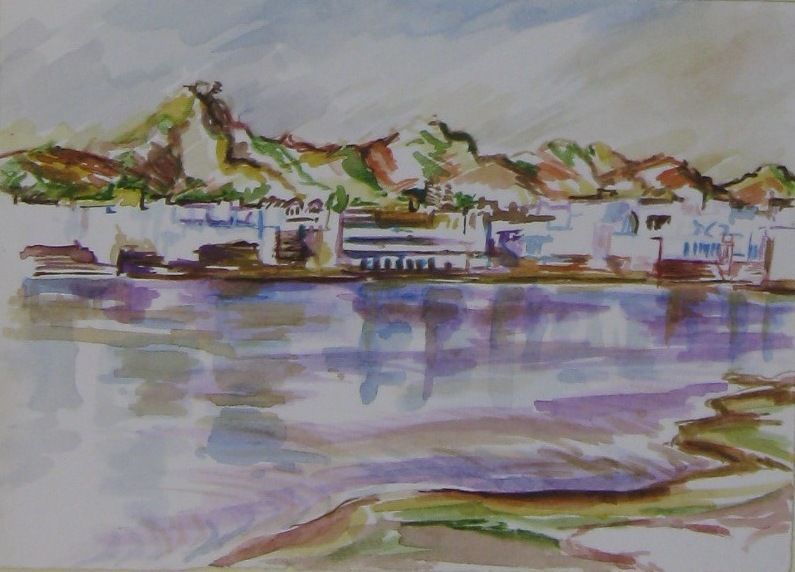
Over the time I was here, I did some drawings up in the hills, around the lake and out in the dunes, where on one occasion a local women invited me to draw from her house after a couple of dogs kept harassing me. She even made me chai, which I paid for, but she wanted more for my sketching time. Her little boy added some marks on it for local content. Pushkar, n-w India 1990.
I spent the next few days wandering about this wonderful landscape of pinnacles in the fields and doing some sketches here and there, including in a nearby valley where I found a church carved out of one of the pillars. I walked around to the village of Zilve along trails below the escarpment, passing a small village in a gorge with many carved dwellings in the cliff-face. I found a wonderful Dr Seuss-like stairway made of wood linking different levels of the carved-out dwellings. Erosion had destroyed the outer walls, leaving the rooms exposed to the outside elements. Goreme, central Turkey 1990.
Southern and western Asian artworks.
Mediums: Watercolour, ink, pen and pencil. Dimensions: 30-21cm to 50-36cm.